Face Change from Age 18 to 25: What Usually Changes?
Your face can keep changing after 18. This guide explains the common shifts people notice between 18 and 25, why those changes happen, and how to use AI age tools as a creative preview rather than a medical prediction.
Quick Answer
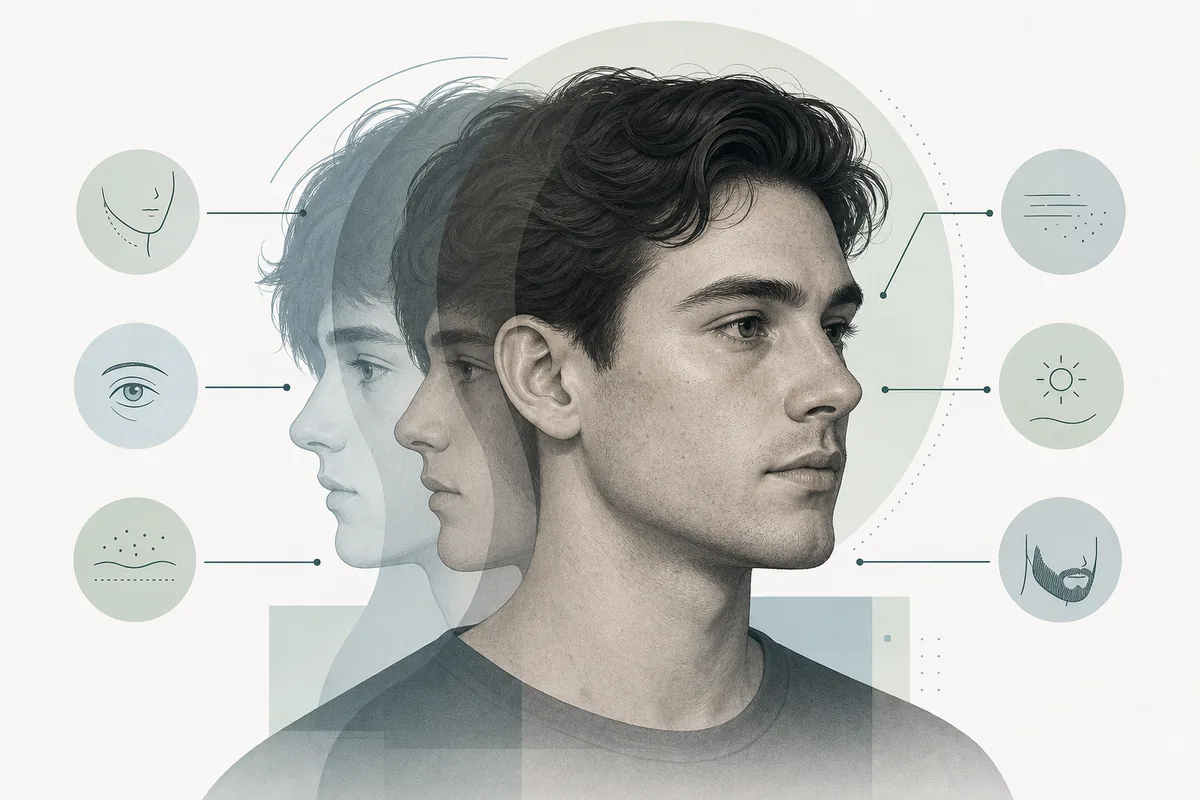
Yes, your face can change from age 18 to 25. Many people notice less teenage fullness, a more defined jaw or cheek structure, small skin texture changes, different facial hair or grooming, and a more mature overall look. The amount varies a lot because genetics, weight, sleep, sun exposure, skincare, hormones, dental changes, and camera habits all affect appearance. For most people, the change is gradual rather than a sudden transformation.
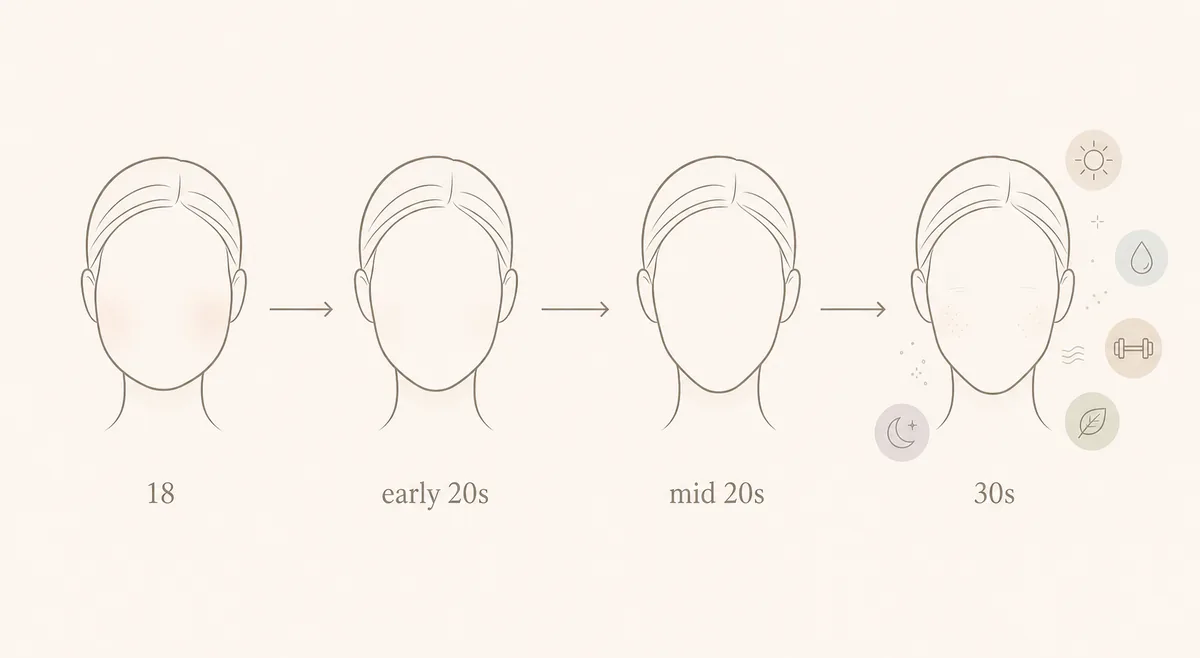
Face Changes by Age: 18, Early 20s, Mid 20s, and 30s
These ranges are general patterns, not rules. Some people keep a youthful face well into their late 20s; others look more mature earlier because of bone structure, weight change, facial hair, makeup, hairstyle, or lifestyle.
| Age range | Common visible changes | What it usually means |
|---|---|---|
| Around 18 | More teenage fullness, softer cheeks, less settled style | The face may still look young even if height has finished changing. |
| Early 20s | Subtle loss of baby fat, more stable face shape, grooming changes | Photos often look more adult because presentation changes as much as anatomy. |
| Around 25 | More defined cheeks or jaw, different skin texture, less teenage roundness | The change is often noticeable in side-by-side photos, but not dramatic day to day. |
| 30s and beyond | Clearer aging cues may appear: fine lines, volume shifts, sun exposure signs | Lifestyle and skincare history start to show more strongly. |
7 Things That Can Make Your Face Look Different at 25
When people ask about face change from age 18 to 25, they are usually comparing old photos with current ones. These are the most common reasons the difference shows up.
Less teenage facial fullness
Cheeks can look less round as the face matures. This does not mean everyone loses volume, but many people see a sharper or more adult shape.
Jawline and cheek definition
Bone structure is mostly set, yet weight distribution, muscle tone, posture, facial hair, makeup, and camera angle can make the jaw or cheekbones look more defined.
Skin texture and tone
Acne history, sun exposure, hydration, sleep, shaving, skincare, and makeup can change how smooth or even the skin appears in photos.
Weight and body composition
Small changes in weight can be very visible in the face. A leaner or fuller face can make the same person look older, younger, sharper, or softer.
Hair, facial hair, and styling
Hairstyle, brows, beard growth, glasses, and clothing style often create the strongest maturity signal between 18 and 25.
Dental and smile changes
Braces, aligners, wisdom teeth, jaw tension, or a changed smile habit can alter how the lower face appears.
Camera habits
Phone cameras, lens distance, lighting, filters, and posing style change a lot over time. Sometimes the photo setup changes more than the face itself.
How to Preview Face Aging Without Treating It Like a Diagnosis
An AI age preview can help you imagine a future look, compare old and current portraits, or create a character reference. It cannot predict exactly how your face will age because it only sees the uploaded image and the chosen target age.
For a realistic preview, use a clear front-facing portrait, avoid heavy filters, choose a modest age jump first, and compare whether the result still preserves your recognizable features. If you are curious about a natural older look, try the AI Age Filter or Face Aging Simulator and treat the output as a creative simulation.
Natural Face Change vs. AI Aging Effect
The search intent matters. A natural 18-to-25 comparison is about real-life maturation; an AI aging effect is a generated visual estimate.
| Topic | Natural face change | AI age preview |
|---|---|---|
| Cause | Genetics, weight, hormones, lifestyle, styling, and time | Model prediction from one uploaded image and target age |
| Best use | Understanding why old photos look different | Creative future-self preview or visual concept |
| Accuracy | Personal and gradual | Approximate and not medical or forensic evidence |
How to Read Your Own 18-to-25 Photo Comparison
When you compare an 18-year-old photo with a 25-year-old photo, try to use images with similar lighting, lens distance, expression, and angle. A close selfie can widen the nose and soften the jaw, while a photo taken farther away can make the same face look more balanced.
Look at stable features first: eye spacing, nose bridge, mouth shape, face outline, and the relationship between cheeks and jaw. Then look at changeable features such as skin texture, hairstyle, facial hair, brows, makeup, glasses, and weight.
If the goal is to choose an AI target age, do not jump straight to a dramatic old-age result. A moderate preview usually teaches more because you can see whether the tool preserves identity before asking for stronger aging.
When an AI Age Tool Helps, and When It Does Not
A face-aging tool is useful when you want a visual experiment, not when you need certainty. Use it with realistic expectations and keep the interpretation lightweight.
Reference Notes
- American Academy of Dermatology Association — general skin-aging factors such as sun exposure and visible skin changes
- Cleveland Clinic — overview of age-related skin changes and why results vary
Related AI Age Tools
Face Change from 18 to 25 FAQ
Curious How Your Face Might Look Older?
Use AI Age Filter as a creative preview after you understand what real face changes usually involve.
Try AI Age Filter