Does Your Face Get Longer as You Age?
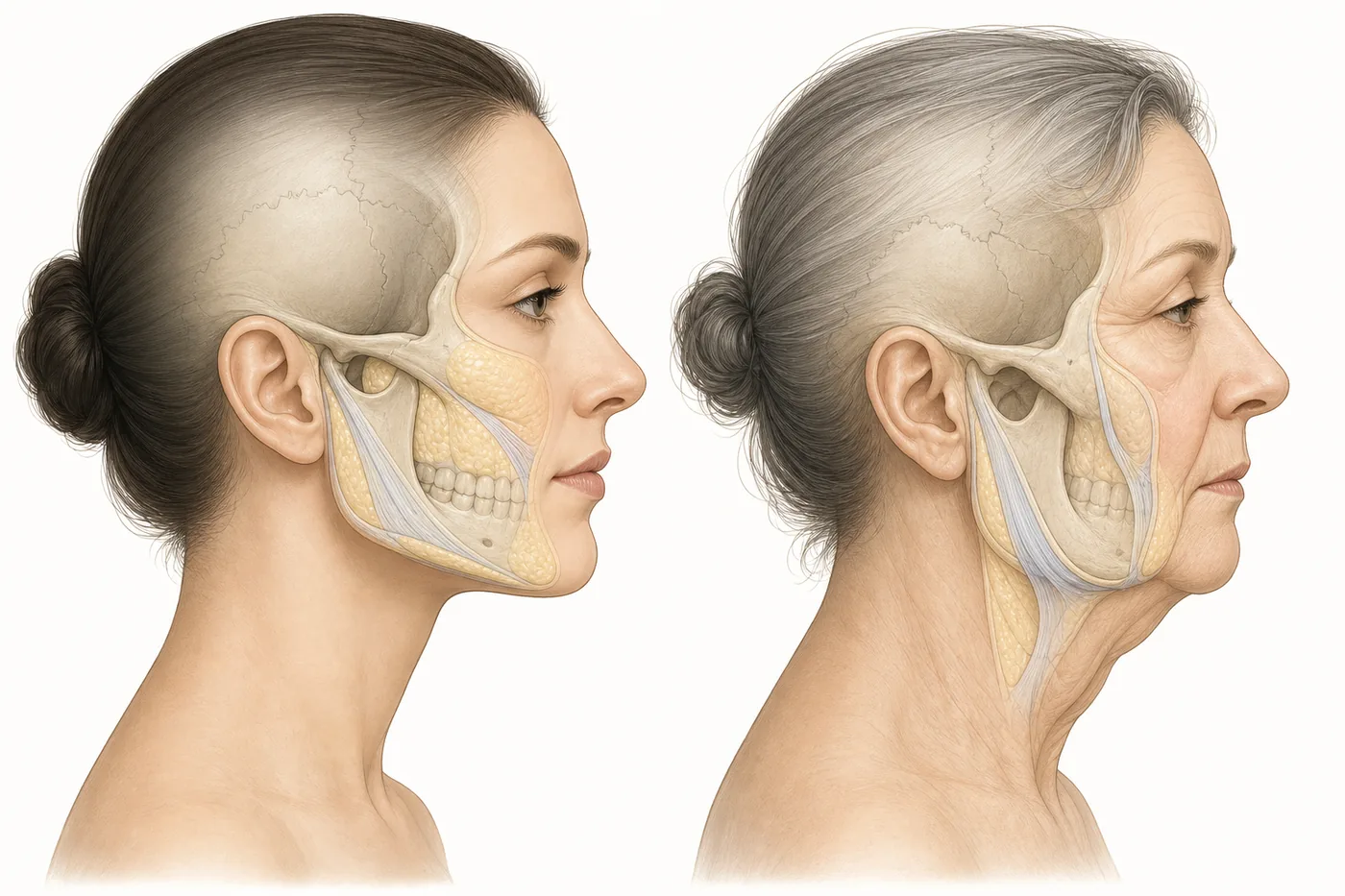
It can appear longer, but the change is usually not simple downward growth. Adult facial aging combines gradual changes in bone support, fat compartments, skin elasticity, dental support, posture and the way photos are taken.
The Short Answer
Yes, a face may look longer as a person gets older, especially from the front or in photographs. The effect usually comes from several small shifts rather than the skull simply stretching. The midface can lose some forward support, cheeks may flatten or descend, the lower face can look more prominent, and skin may drape differently over the underlying structure. Together, those changes can increase the visual distance from the eyes to the mouth or from the cheekbones to the jawline.
Not everyone develops the same pattern. Genetics, body composition, sun exposure, smoking, dental health, hormones, sleep, illness and weight changes all influence facial appearance. A longer-looking face can also be temporary or photographic: a close wide-angle phone camera, a lowered chin, flat hair, overhead light or recent weight loss may create the impression without a meaningful anatomical change.
The useful question is therefore not only “Did my face get longer?” but “Which layer or viewing condition changed?” Comparing standardized photos and separating gradual aging from sudden change gives a much clearer answer than measuring one casual selfie.
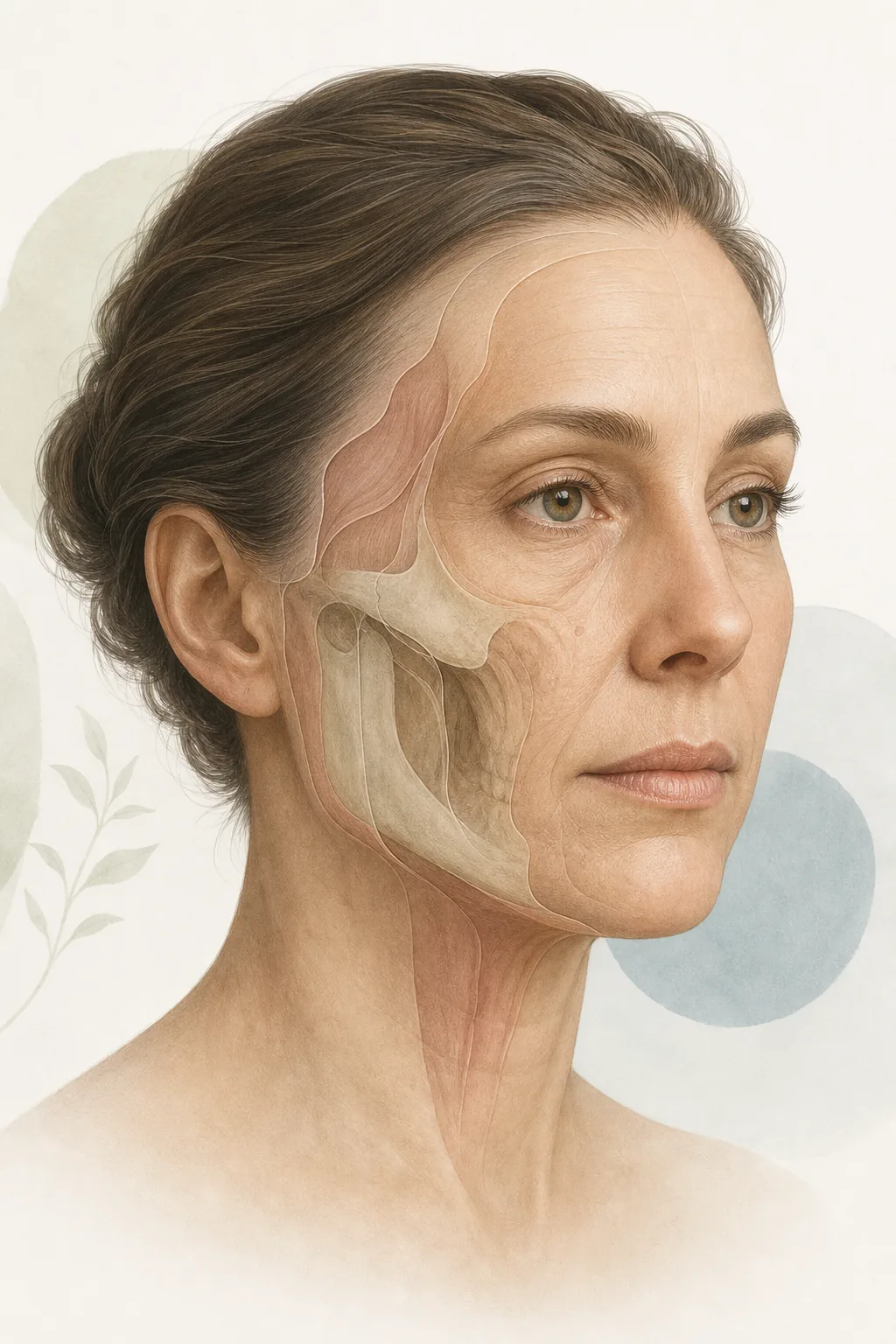
Why a Face Can Look Longer With Age
Facial aging happens across connected layers. Each change may be subtle, but their combined effect can alter the proportions people notice first.
Facial bone support remodels
Adult facial bones continue to remodel. Research describes age-related changes around the eye sockets, upper jaw and lower jaw. These shifts are not the same as uniform growth, but they can change where soft tissue is supported and how strongly the midface projects.
Cheek volume redistributes
Facial fat is organized in compartments rather than one continuous layer. Some areas lose volume while others descend or become more noticeable. Flatter upper cheeks and heavier lower-face contours can make the center of the face appear longer.
Skin and retaining tissues loosen
Collagen, elastin and supporting ligaments change with time and sun exposure. As the skin follows a different contour, folds near the nose and mouth and softness along the jaw can visually lengthen the lower two-thirds of the face.
Teeth and bite affect lower-face height
Tooth wear, missing teeth, changes in bite and dental restorations can alter lip support and the relationship between the upper and lower jaw. Depending on the pattern, the lower face may look shorter, longer or less balanced.
Hair, neck and posture change the frame
A flatter hairstyle, a higher hairline, forward-head posture or a lowered camera angle changes the visual frame around the face. These presentation factors can create a longer silhouette even when anatomical change is modest.
What Kind of Change Are You Actually Seeing?
Use several landmarks instead of judging the entire face with one vague impression.
| Visible cue | Possible explanation | Useful check |
|---|---|---|
| More space below the eyes | Flatter cheek projection, under-eye hollowing or downward camera angle may lengthen the midface visually. | Compare eye-level photos with the same lens distance and soft front light. |
| Longer nose-to-chin impression | Lip support, dental changes, chin posture and lower-face soft tissue can alter this proportion. | Use a relaxed jaw and a neutral head position; note recent dental work or tooth loss. |
| Narrower or flatter cheeks | Weight loss, fat redistribution or stronger shadowing may reduce the apparent width of the upper face. | Compare stable-weight photos and avoid overhead lighting. |
| Heavier jawline or lower cheeks | Skin laxity and soft-tissue descent can move visual weight downward without making the bones longer. | Look at front and three-quarter views rather than one profile. |
| Only selfies look longer | Wide-angle distortion, camera tilt and close distance are likely major contributors. | Move the camera farther away, use roughly eye level and crop afterward. |
When Does Your Face Stop Changing?
Major growth slows after adolescence, but the adult face does not become completely fixed. Bone remodeling, dental changes, fat distribution, skin quality and muscle use continue across adulthood. That is why “when does your face stop changing” is better answered as a timeline than a single birthday.
Changes from the late teens into the twenties often involve maturation, body composition and the jaw settling into adult proportions. Later changes are usually slower and reflect accumulated sun exposure, tissue support, hormones, weight history and normal remodeling. There is no universal age at which every facial feature stops changing.
Year-to-year differences should normally be modest. A dramatic change between two photos may say more about camera distance, expression, body weight or lighting than aging. Decade-scale comparisons made under similar conditions are more useful for seeing a stable pattern.
How to Separate Real Change From Photo Distortion
A simple controlled comparison can prevent overinterpreting one image.
Match camera distance
Use the same device and stand farther than arm's length when possible. Very close lenses exaggerate central features and alter facial proportions.
Keep the head level
Tilting the chin down compresses the lower face in one view and may lengthen the midface in another. Align the camera near eye level.
Standardize light and expression
Use soft window light and a relaxed mouth. Squinting, jaw tension and overhead shadows can create stronger aging cues.
Compare several dates
Choose images from different months or years with similar weight and conditions. A pattern across several images is more meaningful than one unusual selfie.
What Helps Preserve Balanced Facial Appearance
No routine can freeze facial structure, but low-risk habits can reduce avoidable changes and make comparisons more reliable.
When a Facial Change Deserves Professional Advice
Gradual, symmetrical change over years is usually different from a sudden change. Seek prompt medical care for new one-sided weakness, facial drooping, severe swelling, difficulty speaking, vision changes, a new severe headache or other acute neurological symptoms. Those are not cosmetic aging questions.
Arrange a routine medical or dental assessment for a persistent new asymmetry, unexplained weight loss, jaw pain, a changing bite, trouble chewing, a persistent skin lesion or a rapid shift that cannot be explained by photos. A clinician or dentist can evaluate causes that an online article or AI image tool cannot diagnose.
If repeated checking is causing distress or you are measuring your face compulsively, step back from photo comparison. Apparent age and facial proportion are variable, and anxiety can make small differences feel much larger than they are.
Medical and Skin References
- Facial Aging: A Quantitative Analysis of Midface Volume Changes — peer-reviewed overview of structural and soft-tissue changes associated with facial aging
- American Academy of Dermatology: reduce premature skin aging — practical guidance on sun protection and modifiable skin-aging factors
Related Facial Aging Guides and Tools
Face Shape and Aging FAQ
Preview Aging Without Treating It as a Prediction
Use Face Aging Simulator for a creative comparison, then judge real changes with consistent photos and qualified advice when needed.
Try Face Aging Simulator